Learning is something done together — thinking collectively, sharing references, learning how to learn. Syllabi is where merath makes that its work: where our research opens into courses other people can take, and where we design teaching for the groups and institutions we work with. We are a team from different disciplines — historians, anthropologists, political scientists and strategists, archivists, editors, designers, and printers — and each of us came to it through a different training, a different course of study.
The syllabus is the form this work takes, and we treat it as a genre in its own right — an approach to study as much as a plan for it. A syllabus sets out what a group will study, in what order and to what end, and carries them through it together, at a shared pace, toward a shared result. But it is also a way of thinking: to write one is to make an argument about how a subject might be entered, what counts as a beginning, what should follow what, and where understanding is meant to arrive. We study through the syllabus as readily as we teach with it — designing a course is itself a way of working a field out. And once it is written down, a course of study can be examined and improved before it begins, shared among many people at once, and handed on: re-run by another teacher, adapted to another place, set beside others and compared. It turns what one person knows into something a group can learn together, and into something that outlasts the moment of teaching.
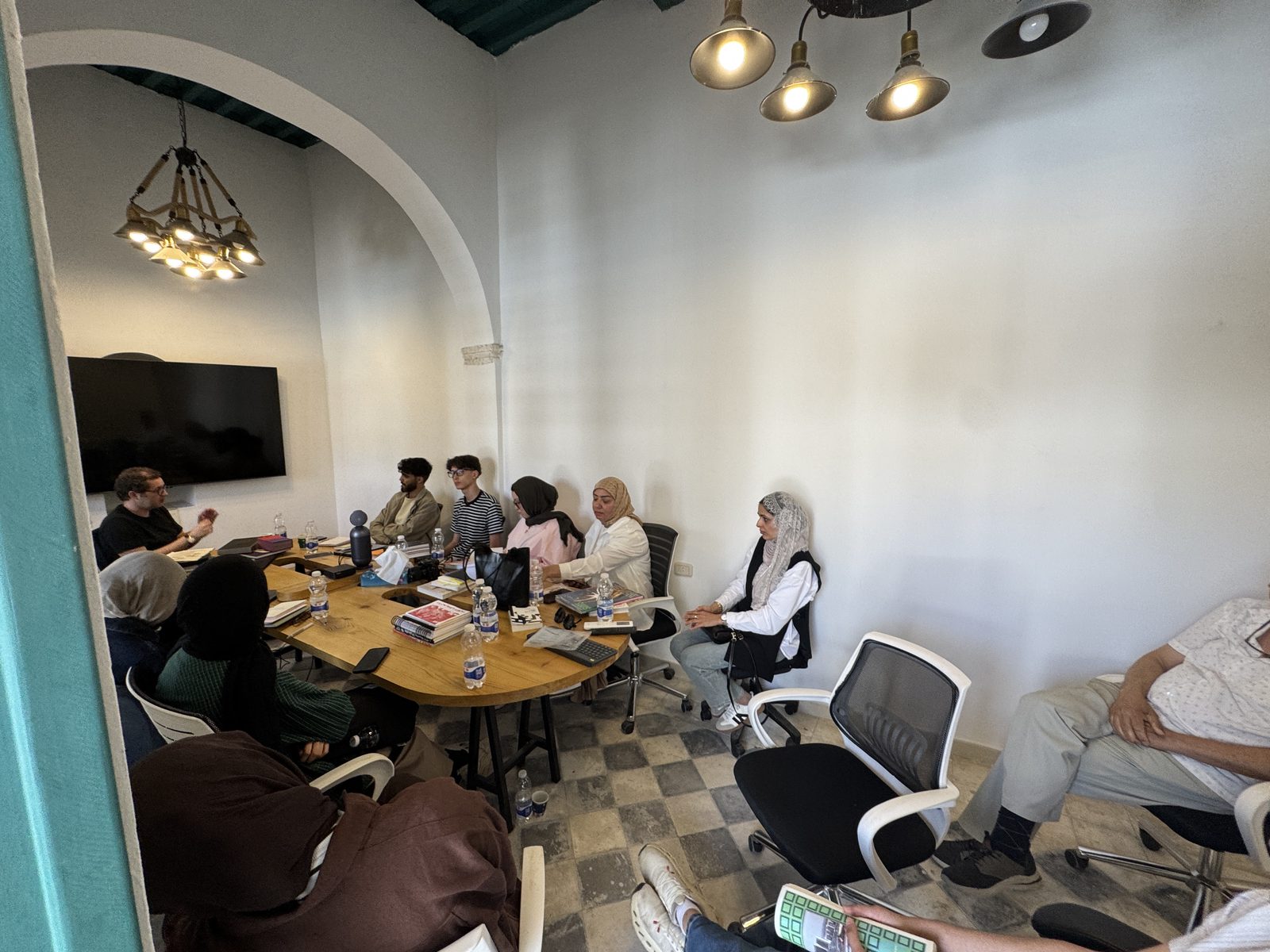
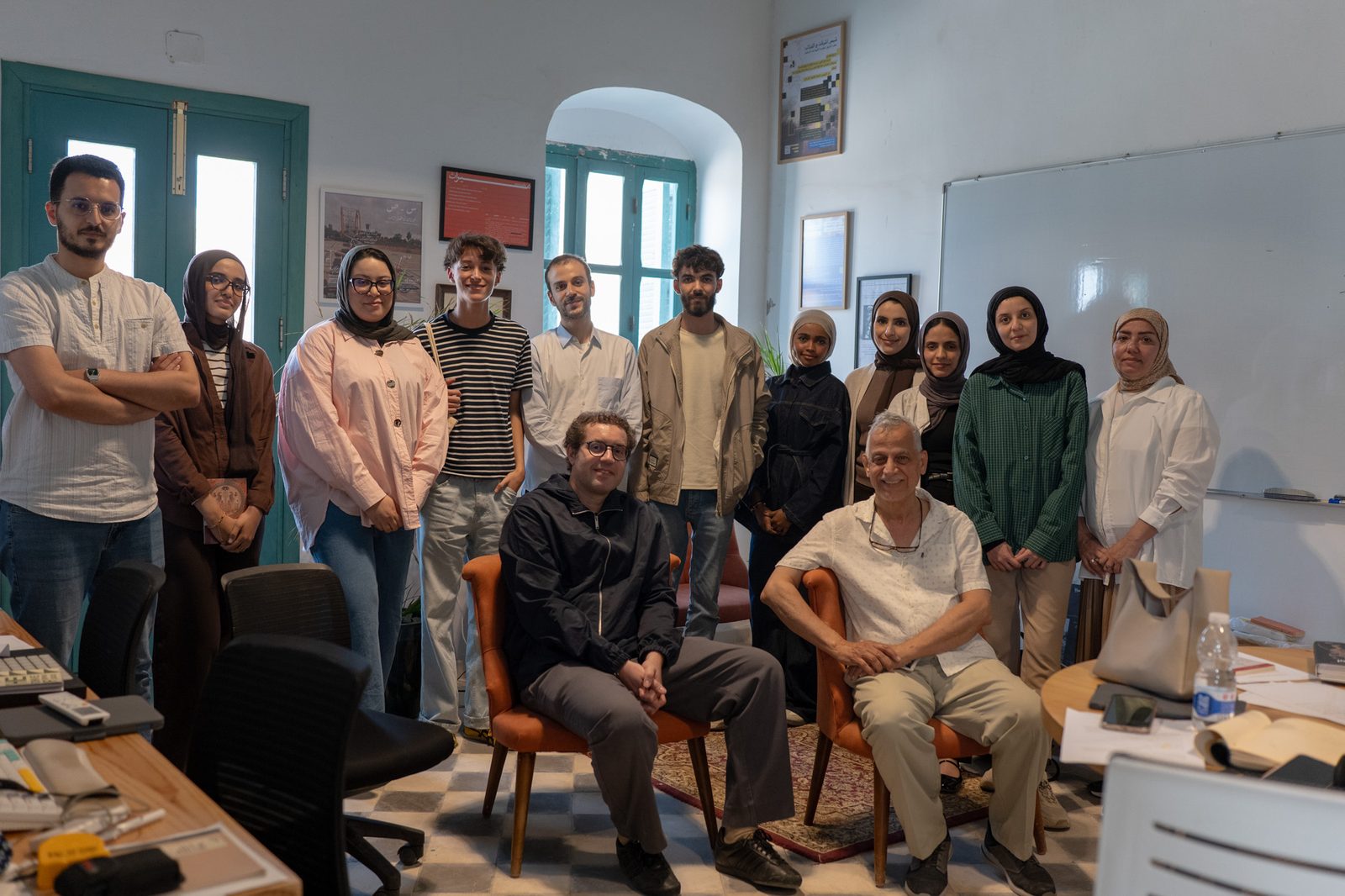
The Art Publication Fellowship runs until 31 October 2026: ten fellows from Tripoli, Benghazi and Al Bayda, in a programme of Workshops with a visiting faculty. Its first books were released at the NY Art Book Fair 2026 on 25 September: The Libyan Print Archive, The Edge of the Frame, What She Left Behind, Bounce Rate and Where We Belong.
A Public Presentation of the fellowship will show the cohort's work together. The syllabi database grows toward a form others can use, and its courses are carried into Saharan Currency and the Research Methods Workshop.
Behind this is a movement that runs through all our work. Research begins with individuals — a question pursued, an archive opened, a method worked out by hand — and left there, it stays with the person who did it. The work is to hold that research as institutional memory, so we keep what each of us learns, and then to open it into collective study, so others can learn it too. The syllabus is how that last step is made.
The forms this has taken are various. In Taught to Travel, the initiative that is part of 01 Sarayān, study itself was the subject: it looked closely at the zawiya, the tomb-school where a course of kinship, hospitality, and ancestral story was taught across a whole geography of movement, with rhythm and repetition setting both the memory and the pace of the journey — study built into travel itself. In the work of the press, a method is set down as a manual, and here the division of labour is exact: the method comes from 04 Research Methods Workshop, while its sequence, its structure, and its shape as a genre come from us — so that a manual is a syllabus for a method. Teaching has also gone directly to where the research happens. In building 02 Saharan Currency, a group in Ghadames was trained in metadata and archival method, so that the people closest to a body of guarded family documents could catalogue it themselves; and a full course of study in archiving was designed for the Libyan Scouts Movement. The research into 07 Art Formation belongs here too, reading the courses of study of an earlier generation — the academy curricula that formed Libya's first modern artists, and the ones they wrote when they came home to teach. And 05 Archaeological Knowledge looks at this most directly: across the second half of the twentieth century, Libyan archaeologists built their own training programmes and syllabi to teach archaeology to one another — foremen who became guardians and guardians who became scholars, a generation writing the courses for a discipline that foreign missions had long kept in their own hands. It is a history of teaching improvised from below, of people making the means to pass on what they knew, and it sits close to what this work attempts now.
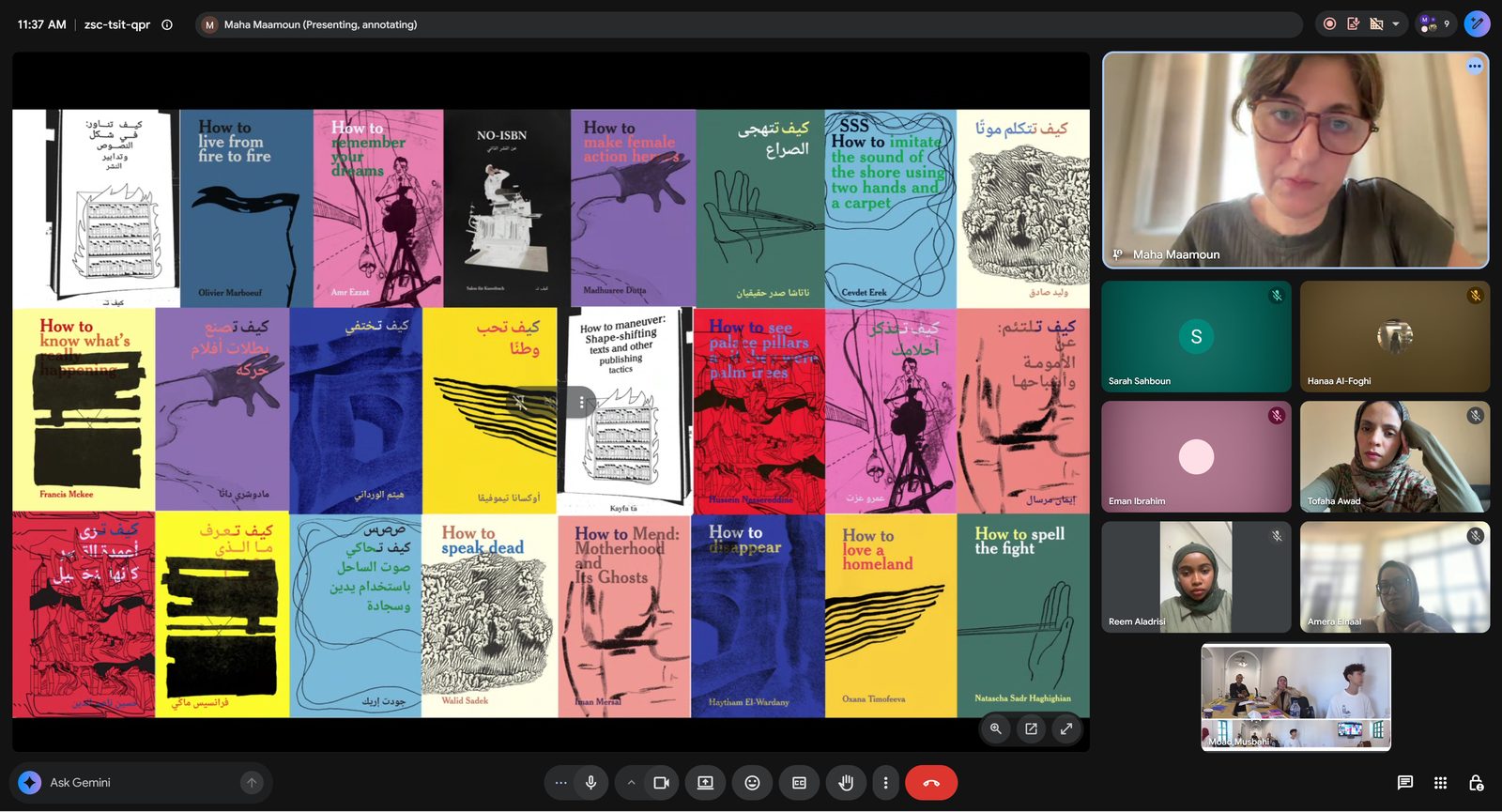
Reading other people's courses of study is part of the work, and we have begun to collect them. Syllabi have been gathered — our own, those of presses, schools, and programmes elsewhere, and historical ones recovered through research — and the gathering continues, building toward a database of the form. A syllabus carries more than a reading list: it shows how a field has been taught, what was held worth learning and in what order, where a course opened a question and where it closed one. Assembled and compared, the collection becomes a resource in its own right — a way to see how practices of many kinds, and teaching itself, have been passed on across the region, and a working library for designing what comes next.
A syllabus is rarely fixed. It is an evolving formation — set down on paper, carried in other shapes, and kept in dialogue with the people who take it. Through their responses it changes in iterations: a course can shift its trajectory partway, as the desires and needs of a cohort come into focus, and when a direction fails to land it loops back and takes another. This is less a plan correcting itself than a matter of trust in a process — and of giving each learner a hand in shaping the thing they are moving through.
So we build the syllabus for the forms it now takes, past the printed handout: as a shared, editable document that keeps its own version history; on a platform that holds the sessions, the materials, and the recordings; as a database where one course is set beside others and drawn on; in the channels through which a cohort leaves its annotations, responses, and reading lists for the next. We design these with the same care as the content itself, because the tools settle how openly a course can be questioned, how easily it changes hands, and how much of it a learner can take into their own. Each is a place where a course can be revised, forked, and handed on — so the syllabus becomes something that accrues and sharpens with every group that takes it, more than a document issued once.
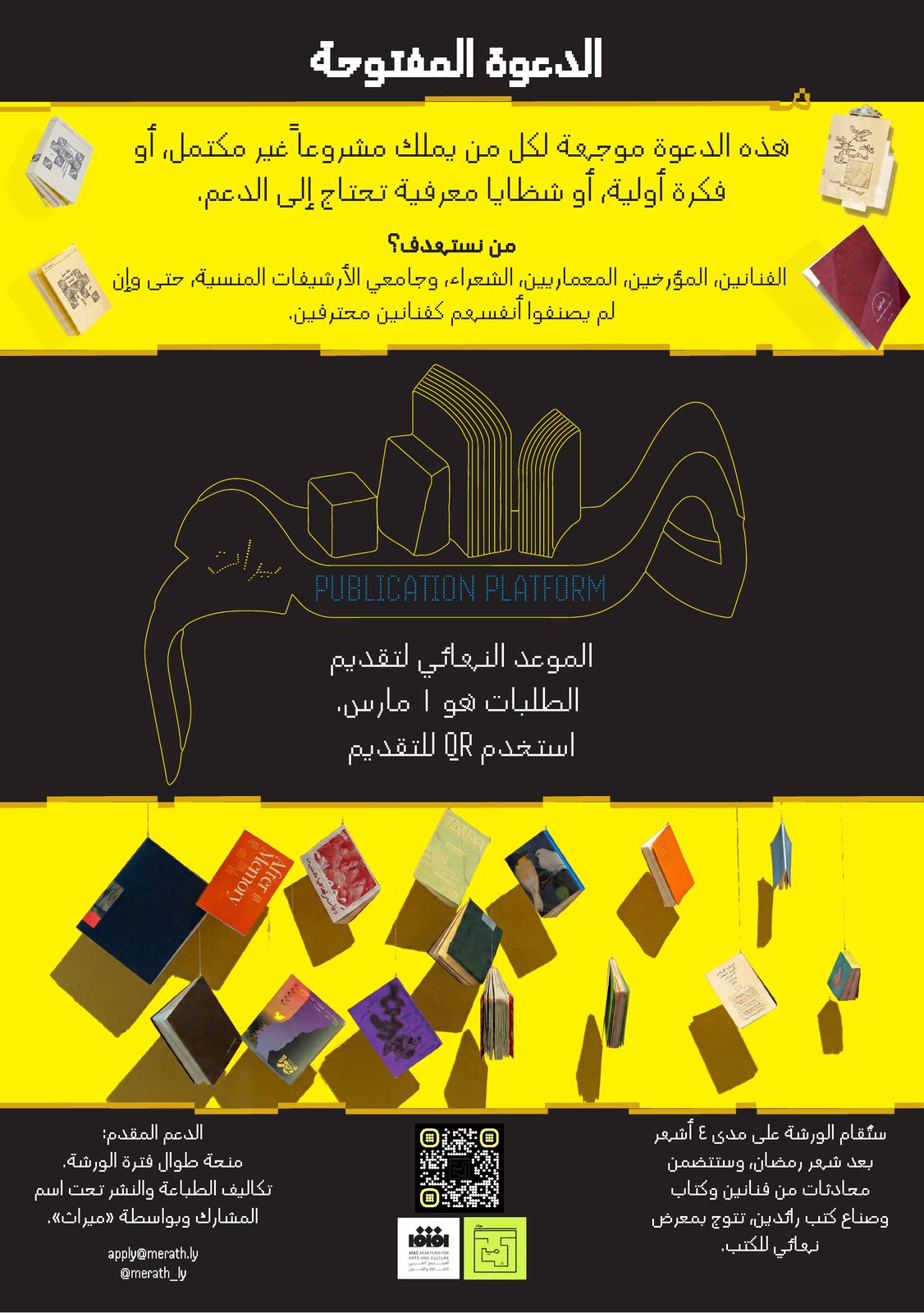
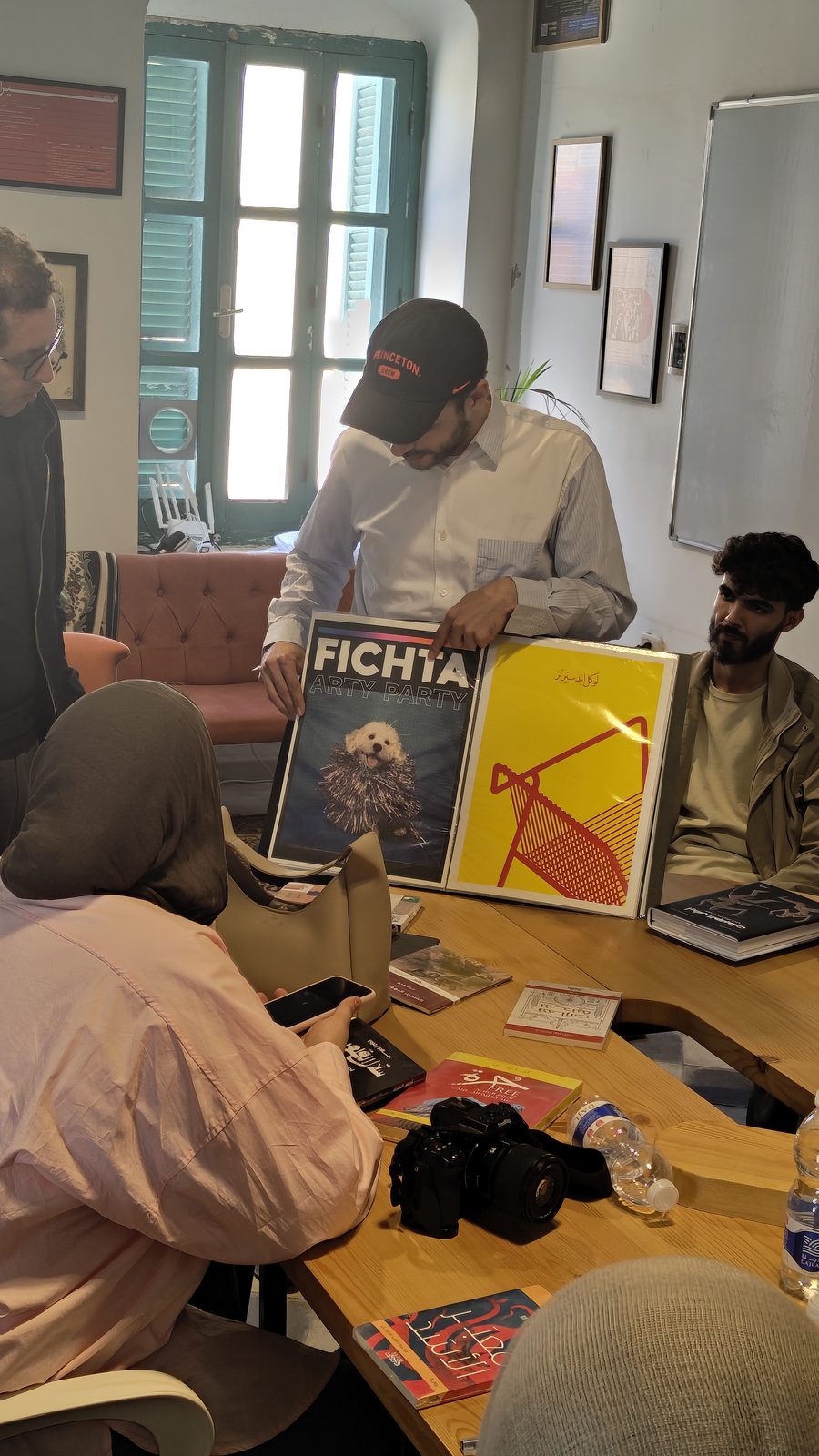
The Art-Publication Fellowship is an experiment in syllabus design, made in an expansive spirit and in the tradition of experimental teaching. Where a manual is a course for a method and a training is a course for a skill, the Fellowship brings whole projects together: ten fellows from Tripoli, Benghazi, and Al Bayda, each arriving with a proposition of their own and the research to begin it, and each leaving with a different publication — a book, or other printed matter, particular to what they are making.
Their backgrounds are as varied as their subjects. Among them are photographers and researchers, writers and artists, working on questions that share little on the surface: the looms and pattern-names of Libyan weaving set beside the logic of binary computation; three generations of women's lives told through domestic objects and the proverbs handed down with them; a colonial-era cinema recovered from old footage and press clippings. Each fellow is developing a different set of skills, toward a different object.
What gathers them is a single distinction: the difference between printing something and publishing it. A printed object can be made by anyone with a press; publishing is what happens around it — the audience it finds, the time it lasts, the way it circulates and travels and is held by readers it never expected. That gap is what the course turns on. Over four months the fellows share one rhythm of sessions, one arc from a first question to a finished object, and one closing book fair where the work meets its first public; what they make is theirs alone, but the problem of how to make it public is held in common.
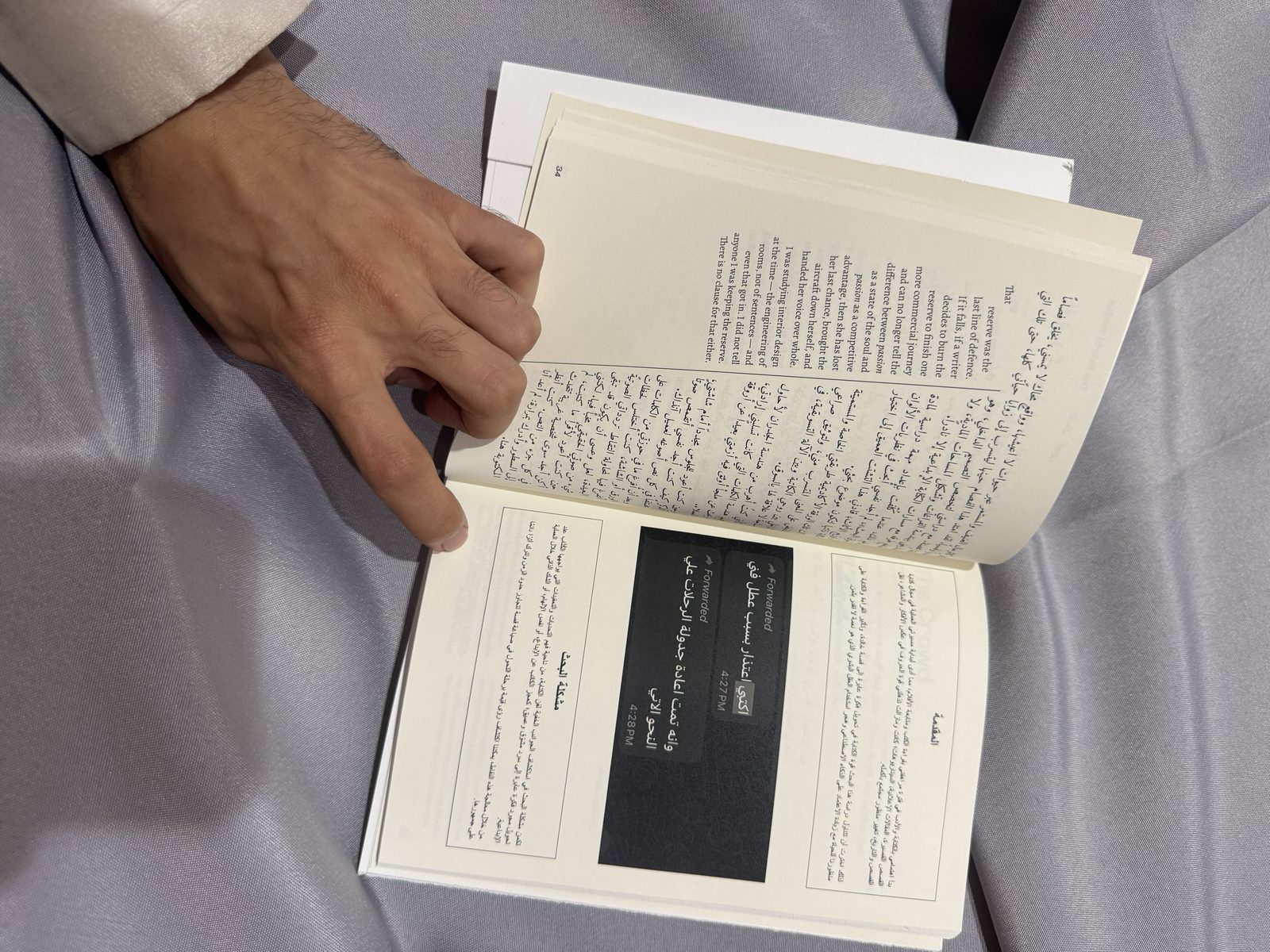
And the method is to start from the content. We work with each fellow and the way they already work — the photographer's encounters, the researcher's archive, the writer's drafts — so that the material, in all its variety, is what drives the form. The record of a blind family becomes a tactile object, set in Braille and embossing and textured paper, because its subject asks for one; a visual history of Libyan design finds a shape where the eras can be read along the book's own edge; a study of women's erased authorship is set in type that performs the erasure. Form follows from content, worked out with the person whose content it is. To train someone on a creative proposition to be printed is to carry that proposition the whole way — through the research that deepens it, the form that embodies it, and the production and release that turn a printed thing into a published one. And the gap between those two — printing and publishing — is where a community gathers around the work and where its life after the book fair is decided, so closing it is treated as part of the making rather than a step that comes after.
This first run is where the approach is being worked out: how much structure a cohort needs and how much room, which sessions belong to everyone and which to the individual project, and how a group holds together when each member is making something different. What is learned here becomes the basis for the next iteration, and for courses built to other ends.
Teaching this way is a wager on continuity. The research a small collective does can stay with the few who did it, or it can be written into courses, run with others, and kept for whoever comes next; the syllabus is the instrument of the second path. It is a modest object — a plan, a sequence, a set of intentions — and an ambitious one, because the courses that teach a field help decide what the field is, and what it is allowed to become. To set down what a subject's first questions are, what should be read and made and in what order, and where a student should arrive, is to take a position on the subject itself.
That ambition carries weight in a place where formal schooling for artistic practice has been scarce, and where much of what is known has lived with individuals — learned abroad, or by hand, or held in a single archive. A syllabus written here, run with a cohort, and kept for the next is a way of building pedagogy from the ground, ahead of any institution that might one day provide it. It is among the most consequential things a collective can make. To set a syllabus down is to outlast its first teaching, to take a position on what is worth learning, and to keep a stake in a future shaped by people we will never meet — who will teach it again, and again, in ways we cannot foresee.
Produced with — Bayt el-Funoun · Libyan Women's Archive
Printed by — Contemporary Image Collective (CIC)
With the support of — Arab Fund for Arts and Culture (AFAC) · Arete Foundation